
Hardwood in Spokane is not a vinyl-plank budget with a prettier name. You are paying for the board, the time to fit it, and the conditions the wood needs before anyone sets a nail or a click. Labor across flooring work in this region often lands between $2 and $12 per square foot; hardwood usually sits toward the skilled end of that range because layout, acclimation, and subfloor flatness are less forgiving. Solid and engineered are not interchangeable quotes. Treat them as different jobs.
What drives hardwood cost more than the species on the sample?
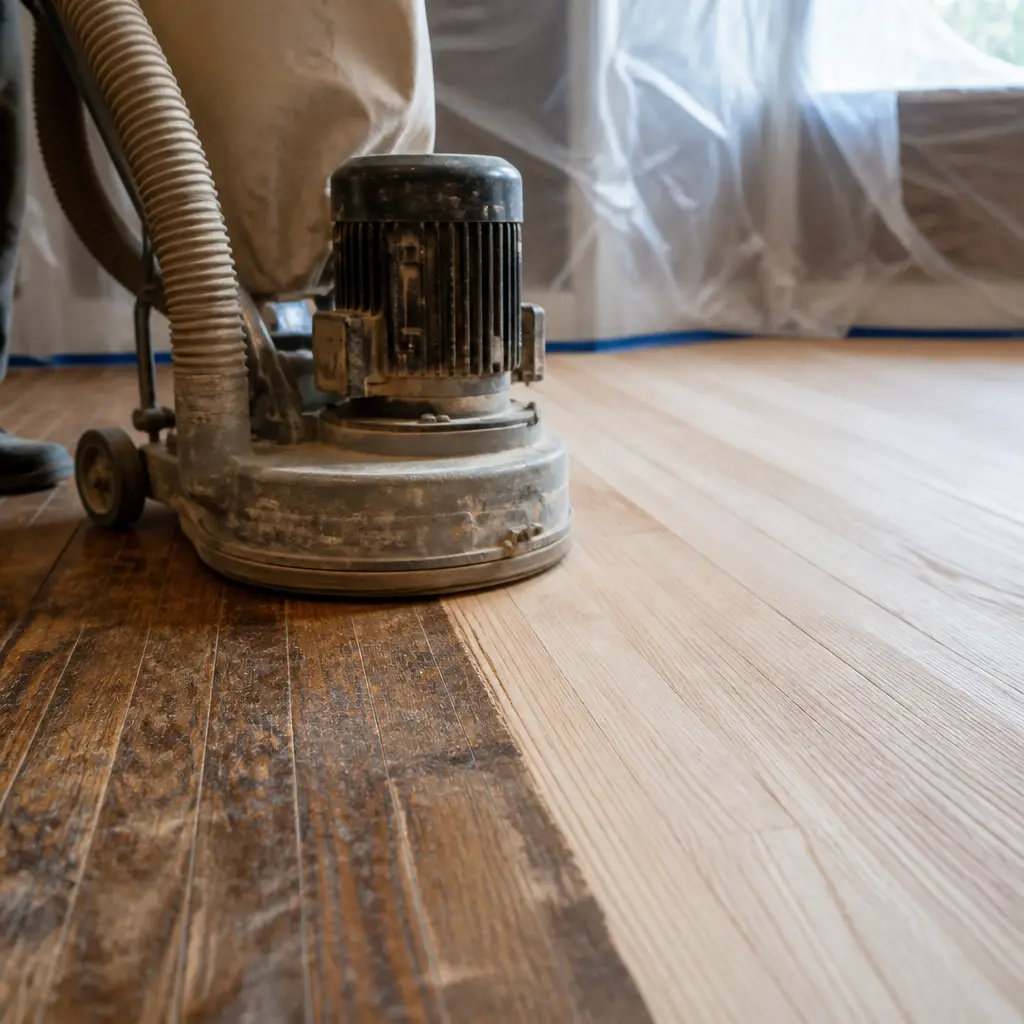
Species and grade set the material line. A Janka hardness rating tells you how the board will dent, not what the installer will charge. Wide planks show waves in the subfloor. Mixed-width patterns take more layout time. Stairs, landings, and rooms that meet tile at a kitchen threshold add cuts. Site-finished solid hardwood is a multi-day sequence — install, sand, stain, coat — and that labor does not resemble a floating engineered floor clicked over underlayment.
Engineered hardwood can be a smarter fit over concrete slabs and in spaces with more humidity swing, which Inland Northwest houses see from dry winter heat to damp shoulder seasons. Glue-down, nail-down, or floating each has a different labor shape. If a quote does not name the method, it is not comparing the same work. Trim, transitions, and refinishing (when you are restoring existing floors instead of installing new) belong on the page too, or they show up later as extras.
Acclimation is not a courtesy delay. Boards that skip it are the ones that gap, cup, or peak after the first real swing in indoor humidity.
How do I know if my subfloor is ready for hardwood?
Hardwood tells on a bad subfloor. High spots telegraph. Dips collect movement. A spongy bay in an older Audubon or North Spokane bungalow will still feel spongy with a nicer board on top. Floor leveling, sistering, and fastening are the unglamorous hours. A vapor barrier over concrete is not optional if moisture is moving through the slab. Who pays for that prep? The homeowner, unless the estimate already carried it as a line. That is the honest reading of most change-order fights.
Before you compare two numbers, walk the exclusions. Demo of existing carpet, vinyl, or a failed floating floor. Haul-away. Furniture moving. Matching stain on existing rooms. Winter scheduling when shops are busy. Spokane labor is not NYC or Bay Area pricing, but a quote that undercuts the field by a wide margin usually dropped one of those items — or dropped the inspection that would have found them.
Should I install over the old floor or pull it?
Sometimes you can go over a sound, flat surface. Often you should not. Stacking height at doors, adding bounce, and trapping moisture under a new wood floor are the usual reasons to pull. Solid hardwood wants a proper wood subfloor and room to move. Engineered has more paths, including some glue-down work over slab, but only if the moisture numbers work. There is no universal yes. There is a measurement, a moisture reading, and a method that matches both.
Warranties on hardwood installation typically cover workmanship defects — proud nails, failed fastening, obvious layout errors — not seasonal gapping from a house that swings dry, water events, or a product the homeowner stored in a garage for a month. Ask what is excluded in plain language before you sign.
Brothers Flooring & Design has spent nineteen years helping Inland Northwest homeowners choose solid versus engineered in the Spokane and Post Falls showrooms, then putting a free in-home estimate around the prep the floor actually needs. If the room has to live hard — kids, pets, a kitchen that sees snow off boots — say that up front. The right board and the right install method cost less than replacing a pretty floor that was never going to hold still.