
A wood privacy fence in Fort Worth is priced as a job, not a poster figure. Linear feet, board style, height, posts, gates, slope, and tearout all move the total. Two houses on the same block can land in different ranges because one has a clean line and the other has a rotting run, a grade change, and a double gate.
Why do wood fence quotes swing so much from one contractor to the next?
Because the quote is a stack of choices, and crews do not stack them the same way. Cedar costs more than mixed or lower-grade boards. Board-on-board uses more lumber than a standard privacy face with small gaps. Six-foot is the usual residential height; eight-foot privacy for a busy street or a two-story neighbor adds posts, boards, and labor. Driven posts go faster in open dirt. Cemented posts take more mix and time, and on North Texas clay they often hold better through shrink-swell and wind. If a quote looks cheap, read the post spec first. That is where a fence fails in this heat and storm season.
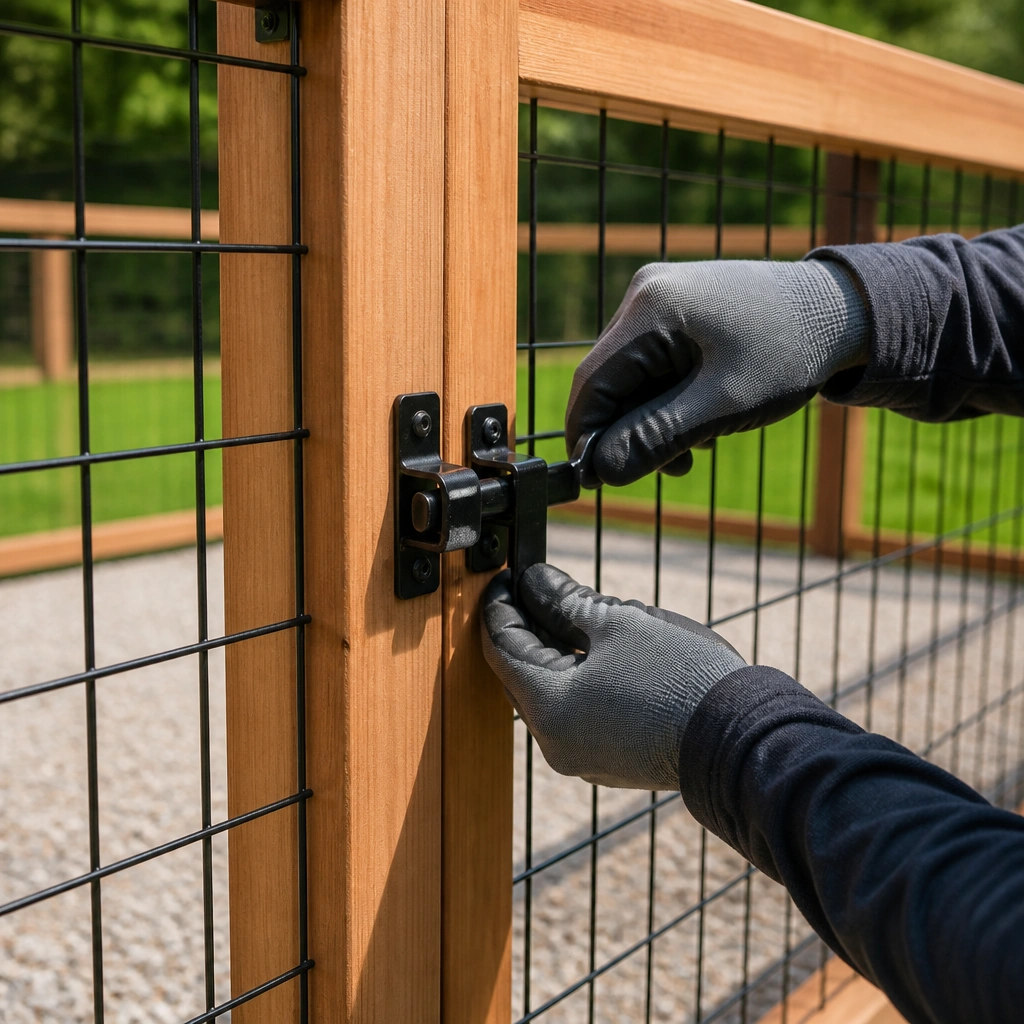
Removal is the other silent line. Pulling a leaning wood fence, hauling it, and digging around old concrete is a day a homeowner never sees on a per-linear-foot internet number. Trees, sprinkler lines, and a tight side yard slow a crew down. Gates are not a few extra feet of fence. A custom wood gate with hardware is its own build.
A 250-foot privacy run with two gates and a full tearout is a different job than 250 feet of new fence on open ground — same footage, not the same price.
What should a wood privacy quote include before you compare numbers?
Ask for the scope in writing: linear feet measured on site, height, board type and grade, post size, driven or cemented, rail count, gate count and width, stain or leave-raw, old-fence removal, and haul-off. If those are missing, you are not comparing quotes. You are comparing guesses. Property-line setbacks and a shared-line talk with the neighbor belong on that same walk. Building on the wrong line costs more than getting the line right up front.
Prefabricated panels go up faster. Stick-built cedar with tight board-on-board takes longer and uses more material. Neither is automatically better, but they should not be priced as the same product. Horizontal cedar looks clean on a lot of Fort Worth infill yards. It also needs stiffer posts and better fastening, because Texas wind loads the face of those boards like a sail.
How long does a typical residential wood fence take once materials are on site?
A straightforward backyard privacy run is often a couple of crew days, not a two-week occupation of the driveway. Long runs, slopes, extra gates, and full replacement stretch that. Wet holes delay concrete. The schedule should be plain at estimate. Slow or vague response on the quote is a useful red flag by itself.
Ft. Worth Fence and Patio quotes cedar privacy, board-on-board, and horizontal wood on site, with transparent pricing and a one-year workmanship warranty. If the old fence is rotting and neighbors can see in, that walk is the honest next step — not a number pulled off a national average.