
Homeowner's Guide
The Homeowner’s Guide to Garage Doors
A garage door gives warning before it strands itself shut — a new noise, a hesitation partway through the cycle, a cable starting to fray. This guide covers what those signs actually mean, what’s worth fixing now versus watching, and how to tell a fair repair quote from a needlessly expensive one.
Warning signs you shouldn’t wait on
Some garage door symptoms are cosmetic; others are an early notice that a part is close to failing outright. A door that hesitates or jerks partway through its cycle is very often a spring losing tension unevenly — not a problem that fixes itself with a squirt of lubricant. A door that reverses on its own before touching the floor usually means the safety sensors are misaligned, or the opener’s down-force is fighting a spring that’s already going.
The same logic applies to sound. A new grinding or popping noise during the cycle, especially if it’s gotten louder over a few weeks, is usually a bearing, roller, or hinge wearing out — and every one of those is a cheaper fix at the “noisy” stage than at the “seized” stage.
Why the spring is the part that actually lifts the door
It’s easy to assume the opener does the heavy lifting, but the opener only guides a door that’s already balanced by its springs — on a properly sprung door, you should be able to lift it by hand, disconnect the opener, and have it hold roughly still at waist height. When a spring goes, the door’s true weight — often 130 to 400 pounds for a standard double door — lands entirely on the opener and on the person trying to lift it by hand.
This is also why a broken spring is dangerous to handle without the right tools. A wound torsion spring stores enough force to cause serious injury if it’s loosened incorrectly, which makes it the one repair on this list worth never attempting solo, regardless of how simple a video makes it look.
What a fair flat-rate quote actually includes
A flat-rate quote should spell out the specific part being replaced, its size or rating, and what happens if the job turns out more involved once the door is apart — a cable failure, for instance, is often caught mid-spring-job and is worth asking about up front. If a quote is vague on any of those three, that’s worth a question before signing, not after.
Be cautious of an estimate that comes in dramatically below every other quote for the same repair. The difference usually shows up later — in a lower cycle-rated spring that fails again within a year, in a “universal” part that doesn’t quite match the door, or in a trip charge that appears once the truck is already in the driveway.
- Ask whether the price includes a full balance test, not just the part swap
- Ask what brand and cycle rating the replacement part carries
- Ask what would change the price — the answer should be short and specific
Torsion vs. extension springs: does it matter which one you have
Torsion springs mount on a bar above the door and wind up tension as the door closes; extension springs run along the horizontal tracks and stretch instead. Most garages built or updated in the last twenty years use torsion springs, since they last longer and balance more evenly — but plenty of older doors still run extension springs, and the repair approach for each is different.
The type on your door matters less for cost than for what a safe repair looks like: extension springs need safety cables running through them to keep a broken spring from becoming a projectile, and it’s worth confirming those cables are actually present the next time a technician is out, regardless of which service brought them there.
What to do in the first five minutes of a garage door emergency
If a door won’t open and a car is trapped inside, most openers have a manual release cord — usually a red handle hanging from the trolley rail — that disconnects the opener so the door can be lifted by hand. Before pulling it, make sure the door is fully down or securely propped; a door caught mid-travel with a bad spring can drop suddenly once disconnected from the opener.
If the door is stuck open at night or a cable has visibly snapped, the safest move is to keep people and vehicles clear of the opening and avoid forcing the remote repeatedly — repeated attempts are what turn a same-day cable repair into a bent track or a damaged panel. A few photos before anything is touched make any insurance conversation easier later, the same as they would for any other sudden home repair.
- Locate your opener’s manual release cord today, not during an emergency
- Never place fingers or hands near a moving track, cable, or spring
- Leave the remote alone if the door resists — repeated tries make repairs worse, not better
How it works
Four steps. No surprises.
The same sequence on every job — it is why our review page reads the way it does.
- 01
Tell us the symptom
Call or send the form — a dispatcher, not a bot, asks the handful of questions that narrow down the fault before a truck is ever sent.
- 02
Flat-rate quote on site
The technician measures, inspects, and hands over a written flat price. Approve it, or wave the tech off and pay nothing.
- 03
Fixed that same visit
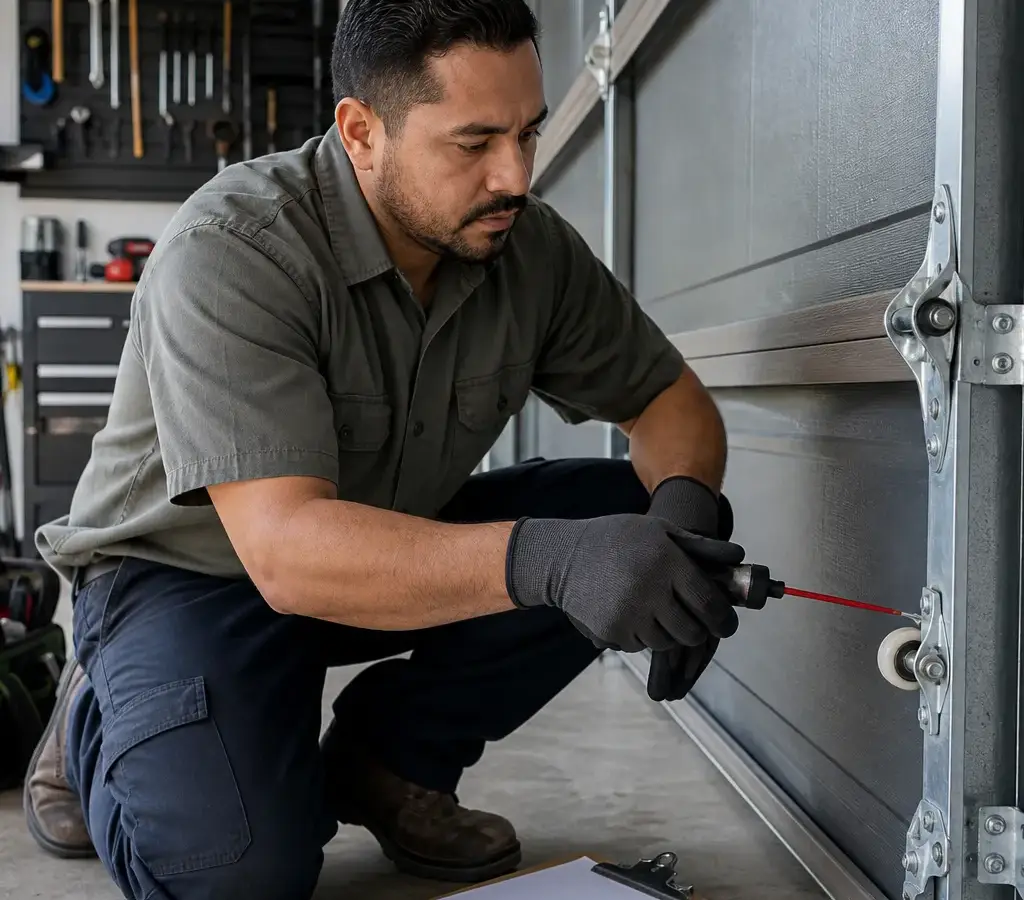
Parts come off the truck, the door is repaired or installed, and the result is cycle-tested through a full range of motion before the workspace is swept.
- 04
Backed in writing
A warranty card, the safety checklist that was run, and a reminder for next year’s tune-up — the file stays on record either way.
One more thing before you scroll back up
Get a written estimate — we repair the door first
Same-day Colorado Springs spring, cable, and opener service. Licensed and insured, 24/7 emergency, no upselling. Call (719) 999-2819.
Monday: 8:00 AM – 6:00 PM