
The Providence Guide to Choosing a Barber
A good barber is one of the few standing relationships a man keeps for decades, and worth a little care in the choosing. This is the shop’s plain-spoken guide to finding the right chair in Providence — how to tell a barbershop from a chain, what a proper cut and shave should cost, and the questions worth asking before you sit down.
When it is time to find a new barber
Most men change barbers only when forced to — a move across town, a shop that closes, a chair that changed hands. But the quieter reason is worth naming: you have started explaining the same thing every visit and getting a different result, or leaving with a cut that looks right for four days and untidy by day ten. A barber who knows you does not need re-briefing, and a good cut should hold its shape most of the way to the next appointment.
If you are reading a guide like this one, you are probably closer to the decision than you think. The good news is that finding the right chair is a one-time cost that pays off for years — so it is worth doing deliberately rather than walking into the nearest open door.
A barbershop is not a chain — and the difference is the appointment
The clearest divide in the trade is not price, it is time. A high-turnover chain is built to move chairs quickly: walk in, wait, sit, done in twenty minutes, next. A barbershop in the older sense is built around the appointment — a named barber, a block of time held for you alone, and a pace that lets the work be done properly rather than fast.
That single structural choice cascades into everything else. A shop that books forty-five-minute blocks and never doubles a chair can afford a real consultation, a scissor-led cut, and a hot-towel finish. A shop paid by volume cannot, no matter how skilled the hands. When you are comparing two places, ask how long the appointment is and whether the chair is ever doubled — the answer tells you most of what you need to know.
How to read a barbershop before you sit down
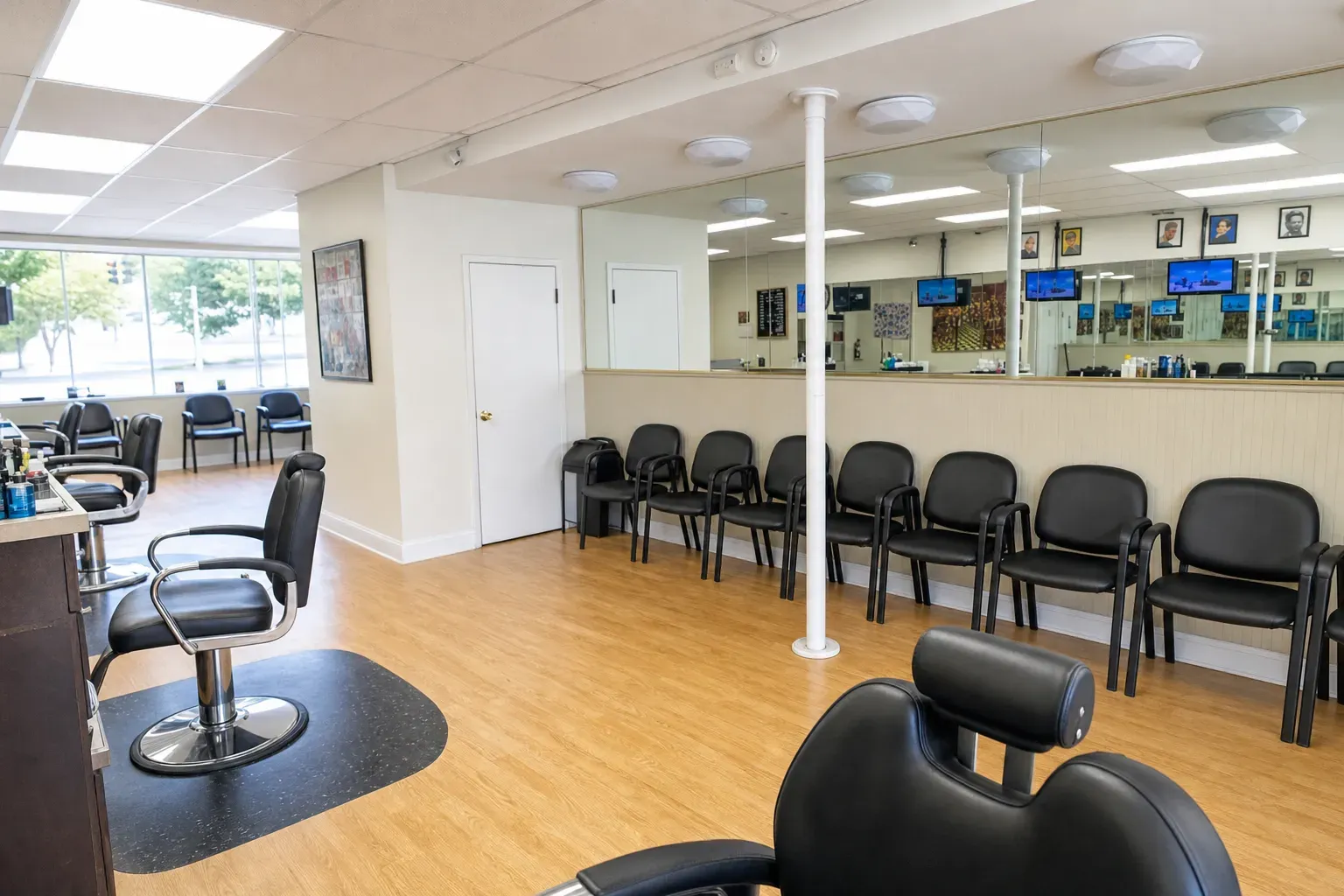
You can learn a great deal in the first two minutes, before anyone touches your hair. Look at the stations: are the tools laid out and clean, the razors stropped, the counters kept? Watch how the shop treats the client already in the chair — is the barber present and unhurried, or glancing at the door for the next walk-in? Listen for whether the barber talks the client through the cut or simply executes it in silence.
- The stations — set and clean says a shop that keeps standards between clients, not just during them.
- The pace — an unhurried chair is the single best sign you have found a real one.
- The book — a shop that runs on appointments and remembers regulars is a shop you can settle into.
Cleanliness and licensing are not optional niceties, either. A shop should display its registration, use a fresh blade for every shave, and sanitise between clients as a matter of course.
The consultation, and why the good chairs insist on it
The five minutes before the first cut are the most important of the appointment, and the surest mark of a serious barber. A proper consultation is not small talk — it is the barber reading your head shape, your growth pattern, the cut you are growing out, and, crucially, how you actually style your hair on an ordinary morning rather than in a photograph you saved once.
A chair that skips this and reaches straight for the clippers is telling you it intends to give you its cut, not yours. The best shops write what they learn onto a service card kept with your barber, so the second visit begins where the first ended and you never have to explain your part of the neck line twice. That card is the difference between a barber who cuts your hair and a barber who knows it.
What a proper cut, shave, and beard trim should cost
Premium barbering is not cheap, and it should not pretend to be — but it should be honest and posted. A serious shop puts one price on each service and charges it to every chair, with no consultation fee, no surcharge for thick or textured hair, and no tipping pressure at a screen. What the plate on the wall says is what the card is charged.
As a rough guide in a city like Providence, expect a scissor-led signature cut to sit in the sixties, a full hot-towel shave in the low-to-mid sixties, and a beard design in the forties — with a short line-up between cuts costing a fraction of a full appointment. Be wary of any shop that will not quote a price until you are caped and seated. Clear pricing is not just fairness; it is a sign of a shop confident enough in its work to name what it costs up front.
The hot-towel shave: what to expect your first time
A traditional straight-razor shave is one of the great small luxuries, and worth understanding before you book your first. Done properly it takes the better part of forty minutes: several hot towels to soften the beard, warm lather brushed in by hand, and two careful passes of the razor — with the grain, then across it — rather than one forced pass that invites irritation.
A good barber reads your skin before starting and, on a first shave, begins with a patch pass and a lighter lather to see how you react. A fresh, single-use blade should be used every time, without exception. If your skin is genuinely sensitive, an honest barber will say so and steer you toward a beard trim instead of selling you a service that will leave you raw. The shave should end with a cool towel and a balm, not a sting.
Caring for the cut between visits
A good cut is a partnership, and half of it happens at your own mirror. The barber should send you off knowing which two products actually suit your hair — usually no more than that — and how to use a modest amount of each rather than a palmful. Most men use too much product and wash their hair too often; a good barber will tell you both, plainly.
The other half of upkeep is the humble line-up. A fifteen-minute straight-razor reset of the hairline and neck, booked once between full cuts, keeps the perimeter crisp and buys a cut an extra week or two of looking deliberate. It costs a fraction of a full appointment and is the single most useful habit for anyone who wants to look consistently sharp rather than sharp only on the day of the cut.
Questions worth asking before you book
A short phone call or a look at a shop’s site answers most of what matters. You are trying to establish two things: that the shop works the way a real barbershop works, and that it will remember you as an individual rather than a slot.
- How long is an appointment, and is a chair ever doubled?
- Can I request and keep the same barber every time?
- Do you post your prices, and is there any surcharge or consultation fee?
- Do you use a fresh blade for every shave?
- Do you keep a record of my cut, so I am not re-explaining it each visit?
A shop that answers these plainly and without defensiveness is a shop you can settle into for the long run. Vague answers to any of them are worth taking seriously.
Finding your chair in Providence
Providence is a small, walkable city, and the practical details of getting to a barber matter more here than the map suggests. A shop near public transit is reachable from most of the metro without a car, which is worth more than proximity by road in a city where parking is its own adventure. Ask where regulars park, or whether the shop is an easy walk from a station — a good front desk will tell you honestly.
More than location, though, look for a shop you can imagine keeping. The whole value of a barber compounds over years: the card that remembers your settings, the standing slot that removes the decision, the barber who catches when something in your hair has changed before you do. Choose for that long relationship, not for the closest open chair — and once you find it, keep it.
The board at Urban Fellow Barbershop & Shave Parlor
Just walk in.
Grab the bench out front if there’s a short wait — you’ll be in a chair before the coffee cools.
Call (401) 737-7384☎ (401) 737-7384